Menu Planning Software for NDIS Supported Accommodation: What to Look For
By Julian Rosenstein, Accredited Practising Dietitian (APD) · Reviewed 13 July 2026 · 7 min read
Most menu planning software on the market was built for residential aged care and hospital foodservice — commercial kitchens, trained cooks, one site, hundreds of beds. NDIS supported accommodation is the opposite: domestic kitchens, support workers rather than chefs, a handful of residents per house with sharply different needs, and a workforce with high casual and agency turnover. Software built for the first environment tends to fit the second badly.
Full disclosure up front: I'm the founder of MenuLogic, which is built specifically for this space, so read this guide with that in mind. But the evaluation criteria below apply to any product you look at — including mine — and the honest answer for some providers will be that a simpler or different tool fits better.
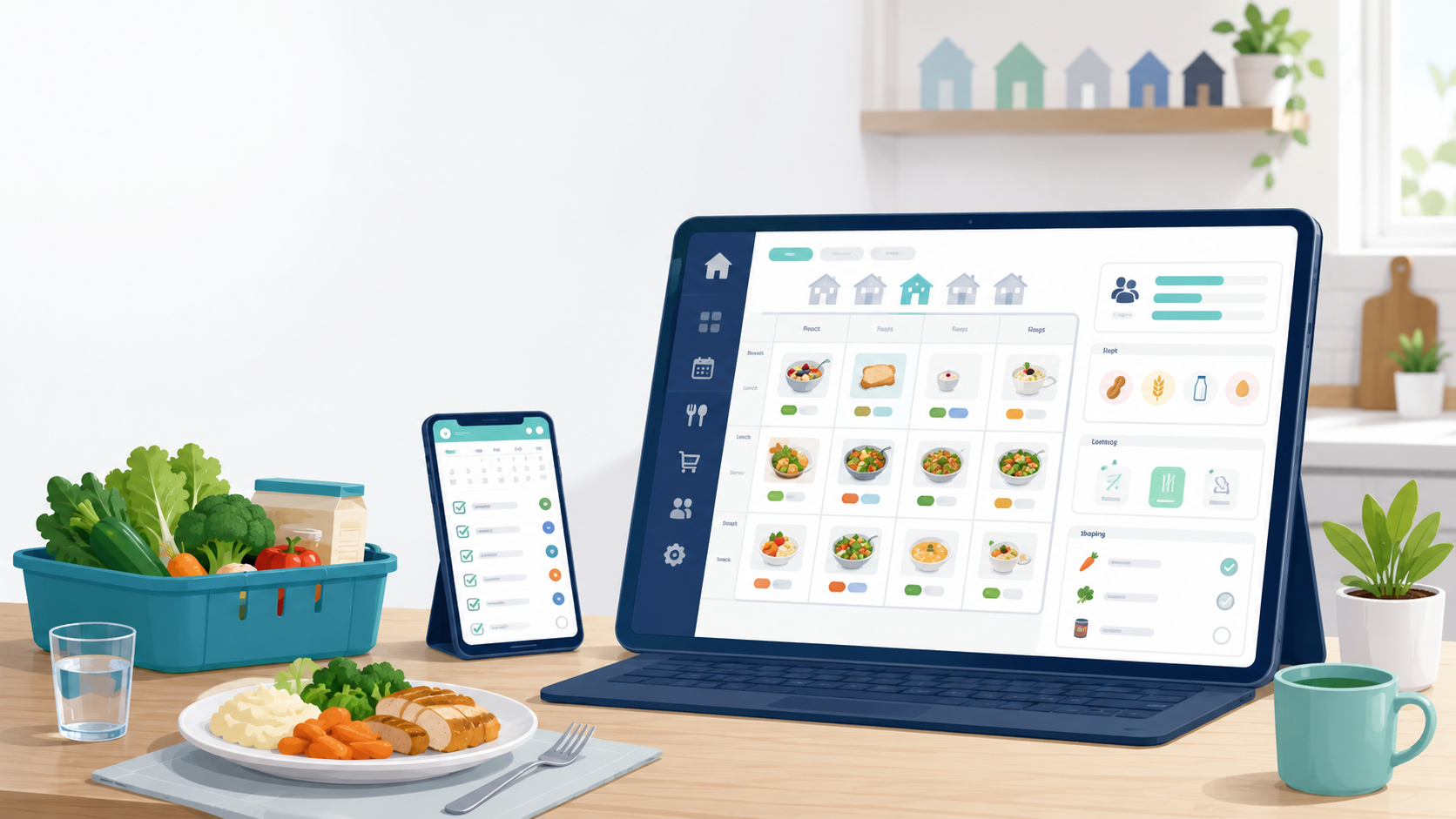
Why aged-care menu software struggles in group homes
Aged-care platforms (the category includes products like MealSuite and other foodservice management systems) are excellent at what they're built for: bulk production kitchens, dietitian-managed cycle menus, tray tickets, stock control at institutional scale. The friction appears when you drop them into a five-resident SIL house:
- They assume a cook. Instructions are written for foodservice staff, not a casual support worker preparing dinner for the first time.
- They assume one kitchen at scale, not fifteen houses with four residents each and different menus in every one.
- Their compliance artefacts target aged-care accreditation, not NDIS Practice Standards evidence — different auditors, different questions.
- Participant choice is an afterthought. NDIS audits expect evidence of individual choice and dignity; institutional cycle menus aren't built around that.
None of this makes those products bad — it makes them built for a different problem.
The 8 criteria that matter
1. IDDSI handling per resident, not per menu. The system should hold each person's texture level (food and drink) and apply it automatically to whatever meal they're served — including showing the worker the exact preparation steps to reach that texture. A menu tagged "soft options available" doesn't do this.
2. Allergen safety at the point of preparation. Alerts must appear where cooking happens, before it happens — not buried in a profile screen nobody opens on shift.
3. Written for support workers. Plain-English steps, one action at a time, no chef terminology. Test this with your least experienced staff member, not your best cook.
4. Multi-house, per-house. Separate menus, residents and records per house, with organisation-wide visibility and one consistent standard. Per-site pricing should make sense at 3 houses and at 30.
5. NDIS-shaped compliance records. Time-stamped logs of meals served, modifications made and intake recorded, exportable in a form an NDIS auditor can use. Ask specifically: "Show me the export you'd hand an approved quality auditor."
6. Participant choice you can evidence. Visual menu choice (photos, simple layouts) that residents with intellectual disability, communication differences or limited literacy can actually use — and that leaves a record for the choice-and-dignity standards.
7. Shopping lists that survive a supermarket. Consolidated, costed against Australian supermarket pricing, in supermarket quantities. Group homes shop at Woolworths and ALDI, not through foodservice distributors.
8. Setup a house manager can do. If implementation needs a project team, it won't survive contact with a stretched SIL operation. A house should be live in minutes to hours, not weeks.
Questions to ask any vendor (including us)
- Show me one recipe adapted to three different IDDSI levels for three residents at the same table. Who does that work — the software or my staff?
- What does an agency worker who's never met the residents see when they open tonight's dinner?
- What exactly would I export if an NDIS auditor asked for three months of mealtime records for one participant?
- Was this product built for disability accommodation, or adapted from aged care/foodservice? What's different in the disability version?
- What happens to my records if I cancel?
- What does it cost at my actual scale — per house, per resident, per organisation — and what's in the contract about lock-in?
Honest trade-offs
- If you run large congregate settings (20+ residents, commercial kitchen, employed cooks), aged-care foodservice platforms are genuinely strong candidates — that's their home ground.
- If your houses cook well already and your only gap is records, a lightweight documentation tool or your existing CRM's forms may be enough. Software should solve a real operational problem, not add an app.
- If your gap is the full chain — plans to menus to shopping to safe preparation to auditable records, executed by non-cooks across multiple small houses — that's the problem disability-specific menu software exists for, and it's exactly what MenuLogic was designed end-to-end to do. A 30-minute demo with your own house setup is the fastest way to judge fit; there's a 14-day trial and no lock-in on monthly plans.
FAQ
What is menu planning software for NDIS providers?
Software that turns each participant's dietary needs — IDDSI texture levels, allergies, preferences — into house menus, preparation instructions, shopping lists and compliance records, so support workers can deliver safe mealtimes consistent with each person's mealtime management plan.
Can NDIS providers use aged-care menu software?
Yes, and some do — it's strongest in large congregate settings with commercial kitchens. In SIL group homes it tends to fit poorly: it assumes trained cooks, institutional-scale kitchens and aged-care accreditation requirements rather than NDIS Practice Standards evidence.
What should menu software cost for a SIL provider?
Pricing models vary — per house, per resident or per organisation. As a reference point, MenuLogic's published pricing runs from $499/year for an individual to $999–$1,799/year per house depending on size, with volume pricing across multiple houses. Weigh any price against the support-worker hours currently spent on menus, recipes and shopping lists (typically 3–4 hours per house per week).
Does menu planning software replace a mealtime management plan?
No. Plans are written by a speech pathologist following a swallowing assessment. Software operationalises the plan — making sure the textures, restrictions and monitoring it prescribes actually happen at each meal and are recorded.
Julian Rosenstein is an Accredited Practising Dietitian and the founder of MenuLogic, with more than seven years' experience in disability and supported accommodation.